Introduction
Monkeypox (Mpox) is a rare disease caused by infection with the Monkeypox virus. The Monkeypox virus belongs to the genus Orthopoxvirus, family Poxviridae. The genus Orthopoxvirus also includes the smallpox virus (variola virus), vaccinia virus (used in the smallpox vaccine), and cowpox virus.
Monkeypox was first identified in 1958 when two outbreaks of a smallpox-like disease occurred in colonies of monkeys kept for research, giving rise to the name “monkeypox.” In humans, monkeypox symptoms are similar to, but milder than, those of smallpox. The disease usually begins with fever, headache, muscle aches, and fatigue. The main difference between smallpox and monkeypox is that monkeypox causes swelling of lymph nodes (lymphadenopathy), while smallpox does not.
Monkeypox virus transmission occurs when a person comes into contact with the virus from animals, humans, or contaminated materials. The virus can enter the body through breaks in the skin (even if not visible), through the respiratory tract, or through mucous membranes (eyes, nose, or mouth). Laboratory tests used for monkeypox diagnosis include immunohistochemical tests, electron microscopy, real-time polymerase chain reaction (RT-PCR), and viral isolation.
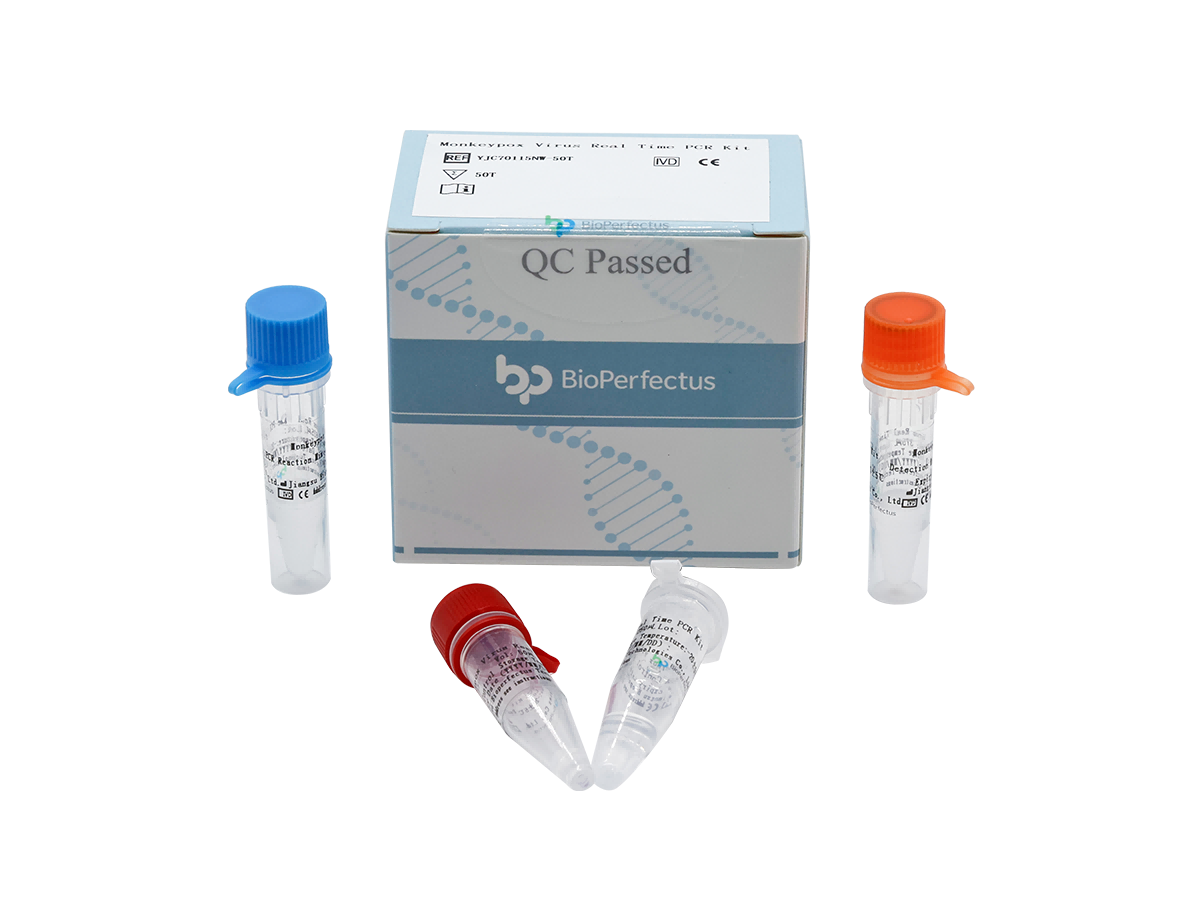
The Bioperfectus Real-Time PCR Kit for Monkeypox Virus is based on real-time PCR technology. Specific primers and probes were developed based on the F3L gene regions of the Monkeypox virus. Additionally, the kit contains a housekeeping gene (RNase P) as an internal control (IC) to monitor sample collection and nucleic acid extraction.
Features
-
Approved: CE marking
-
Viable: compatible with multiple sample types
-
Efficient: 62 minutes for 96 samples
-
Reliable: 5 copies/reaction with internal control
-
Comprehensive: detection of Central Africa and West Africa clades