Introduction
There are four types of influenza (flu) viruses: A, B, C, and D. Wild aquatic birds, including gulls, terns, and shorebirds, as well as wild waterfowl such as ducks, geese, and swans, are considered natural reservoirs (hosts) for avian influenza A viruses.
Avian influenza A viruses are classified into two categories: low pathogenic avian influenza (LPAI) A viruses and highly pathogenic avian influenza (HPAI) A viruses. Highly pathogenic viruses cause severe disease and high mortality in infected domestic poultry. Only some A(H5) and A(H7) avian influenza viruses are classified as HPAI, while most A(H5) and A(H7) viruses circulating among birds are LPAI.
Infections with HPAI A(H5) or A(H7) viruses can cause diseases affecting multiple internal organs, with mortality rates up to 90% to 100% in chickens, often within 48 hours. Both HPAI and LPAI viruses can spread rapidly through poultry flocks. Avian influenza A viruses rarely infect humans. The most frequently identified subtypes of avian influenza A viruses associated with human infections are H5, H7, and H9.
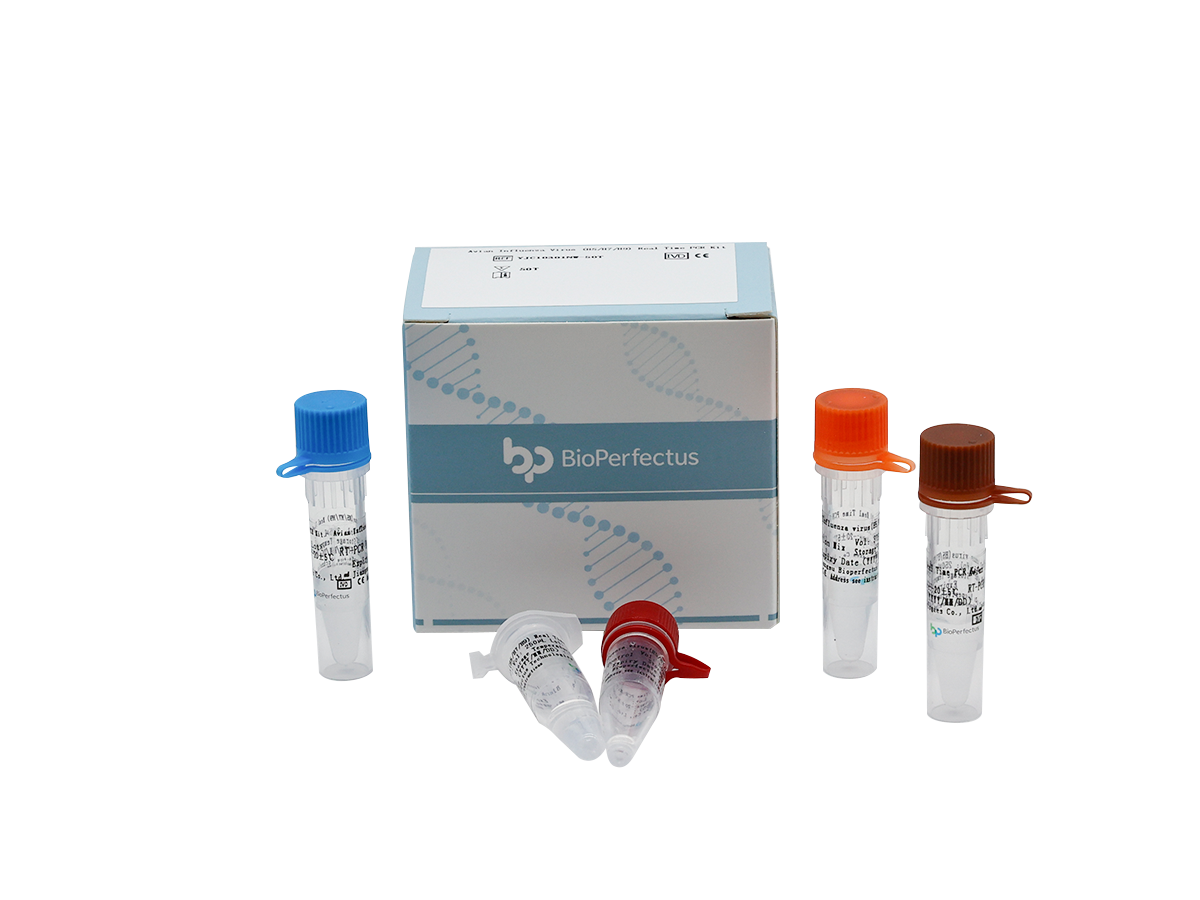
The BioPerfectus Avian Influenza Virus (H5/H7/H9) Real-Time PCR Kit is an in vitro diagnostic test, based on real-time PCR technology, intended for the detection and differentiation of Avian Influenza Virus (AIV) RNA of subtypes H5, H7, and H9. Samples can be obtained from human nasopharyngeal and oropharyngeal swabs.
Features
-
No cross-reactivity: No cross-reactivity with other viruses showing similar symptoms
-
Internal control ensures the reliability of the entire process
-
Compatibility: Suitable for most real-time PCR instruments available on the market